Category C1 License Training (7½ tonne)
 Looking to drive a 7.5-tonne vehicle for work or personal use? Our Category C1 licence training helps you gain the skills, confidence and qualifications needed to drive medium-sized commercial vehicles safely and legally.
At L&T Transport, we provide professional C1 licence training in Pontefract for drivers across Yorkshire and surrounding areas. Whether you need a C1 licence for ambulance driving, delivery work, logistics, utilities, horsebox transport, motorhomes or career progression, our experienced instructors will guide you through every stage of the process.
From applying for your provisional entitlement to passing your C1 driving test, we provide straightforward support and practical training designed around your individual experience level.
Call today to discuss your training requirements and book your C1 course.
What Is a Category C1 Licence?
A Category C1 licence allows you to drive vehicles weighing between 3,500kg and 7,500kg Maximum Authorised Mass (MAM), with a trailer up to 750kg.
Many drivers require a C1 licence to operate:
- 7.5-tonne delivery vehicles
- Ambulances
- Horseboxes
- Utility service vehicles
- Certain recovery vehicles
- Large motorhomes
- Specialist commercial vehicles
If you’re unsure whether a vehicle requires a C1 entitlement, our guide on what you can drive with a C1 licence can help explain the different vehicle categories and licence requirements.
Who Needs C1 Licence Training?
You will typically need C1 licence training if:
- You passed your car test after 1 January 1997 and wish to drive a vehicle over 3.5 tonnes.
- You want to work in transport, logistics or delivery services.
- You are pursuing a career in the ambulance service or emergency response sector.
- You need to drive a horsebox or larger motorhome.
- Your employer requires you to hold Category C1 entitlement.
Many employers actively seek drivers who hold additional vehicle qualifications, making a C1 licence a valuable addition to your driving credentials.
Why Obtaining a C1 Licence Matters
A C1 licence is often the first step into the professional driving industry. It allows you to access a wider range of driving roles and can significantly improve your employment opportunities.
Benefits include:
- Access to more driving jobs
- Increased earning potential
- Greater flexibility in transport and logistics roles
- Improved career progression opportunities
- Ability to drive larger commercial vehicles legally
- A pathway towards higher vehicle categories such as Category C
For many drivers, obtaining a C1 licence becomes the foundation for a long-term transport career.
How to Get Your C1 Licence
Obtaining a Category C1 licence involves several stages. Our team can guide you through each step to make the process as straightforward as possible.
Step 1 – Hold a Full Car Driving Licence
You must be at least 18 years old and hold a full UK car driving licence.
Step 2 – Complete a Medical Examination
Before applying for a provisional C1 entitlement, you’ll need an LGV medical examination.
The medical assessment assesses whether you meet the DVLA’s health and eyesight standards for driving larger vehicles.
For many drivers, this is the first step towards obtaining a vocational driving licence.
Step 3 – Apply for a Provisional C1 Licence
Once your medical has been completed, the relevant DVLA forms must be submitted.
If you need assistance, our team can explain the application process and direct you to further information regarding obtaining a provisional HGV licence.
Step 4 – Pass the Required Theory Tests
Before taking practical C1 training and the driving test, you’ll need to complete:
- Multiple-choice theory test
- Hazard perception test
Some drivers may also require a Driver CPC qualification depending on the type of work they intend to undertake.
Step 5 – Complete Your C1 Driving Course
Once your theory tests have been passed, practical training can begin.
Your course is tailored to your experience level and focuses on helping you become a safe, confident and test-ready driver.
Step 6 – Pass Your C1 Practical Test
After completing your training, you’ll take the practical driving test and reversing exercise.
Upon passing, you’ll gain your Category C1 entitlement and be legally qualified to drive vehicles within the category limits.
What’s Included in Our C1 Licence Training?
Our Category C1 training programme is designed to prepare you for both the driving test and real-world driving situations.
Training typically covers:
Vehicle Familiarisation
You’ll learn the differences between driving a car and operating a 7.5-tonne vehicle, including dimensions, visibility, braking distances and vehicle handling.
Daily Vehicle Safety Checks
Understanding vehicle safety inspections is essential for both the driving test and professional driving responsibilities.
Road Positioning and Observation
You’ll develop safe driving habits, effective mirror use and proper road positioning for larger vehicles.
Manoeuvring and Reversing
Many learners find reversing the most challenging part of C1 driving. Our instructors provide practical coaching to help you perform manoeuvres safely and confidently.
Urban, Rural and Dual Carriageway Driving
Training takes place across a variety of road environments to ensure you’re fully prepared for real driving conditions.
Test Preparation
We’ll help you prepare for every aspect of the practical assessment, including the reversing exercise, show-me/tell-me questions and on-road driving test.
What Does a C1 Driving Test Involve?
Many learners ask what to expect during a C1 driving test.
The practical assessment typically includes:
Vehicle Safety Questions
You’ll answer questions about vehicle safety and roadworthiness.
Reversing Exercise
You must demonstrate safe control and accuracy while completing the reversing manoeuvre.
On-Road Driving Assessment
The examiner will assess your ability to:
- Drive safely in traffic
- Use mirrors effectively
- Maintain good road positioning
- Anticipate hazards
- Follow road signs and directions
- Demonstrate vehicle control
The test is designed to ensure you can safely operate a C1 vehicle in a range of driving conditions.
Success Stories
Every year, we help drivers take the next step in their careers by passing their vocational driving tests.
When you pass your test, we’ll add your photo to our growing Wall of Success alongside hundreds of successful drivers who have completed their training with L&T Transport.
Our success stories include:
- Delivery drivers advancing their careers
- Ambulance service applicants gaining essential qualifications
- Horsebox owners obtaining legal entitlement
- Drivers moving into logistics and transport roles
- Individuals progressing towards higher HGV licence categories
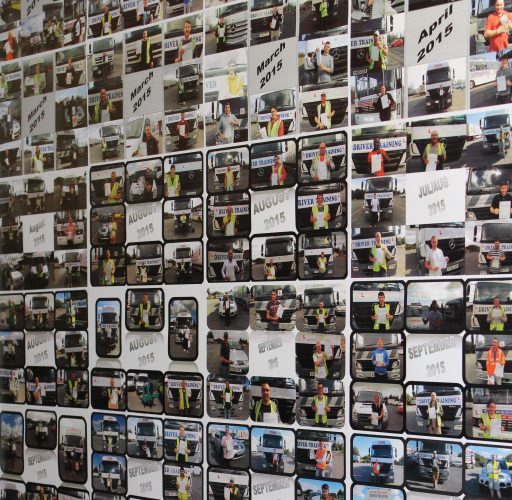 The L&T Transport ‘Wall of Success’.
We take pride in helping drivers achieve their vocational driving goals.
Why Choose L&T Transport for C1 Training?
Choosing the right training provider can make a significant difference to your learning experience and test success.
Drivers choose L&T Transport because we offer:
Experienced LGV Instructors
Our instructors have extensive experience training professional drivers across multiple licence categories.
Tailored Training
Every learner arrives with a different level of experience. We adapt the course to suit your needs.
DVSA Test Centre Access
Your practical driving test is conducted by a DVSA examiner at our own testing centre, helping create a familiar training environment.
Modern Training Vehicles
Training takes place in our well-maintained C1 training vehicles designed to help learners build confidence quickly.
Support Throughout the Process
From provisional licence applications through to test day, we’re available to help answer questions and guide you through the process.
FAQs
- How much does C1 licence training cost?
The average cost of C1 licence training is typically between £800 and £1,500, depending on the number of training days required, test fees, and whether your package includes theory test support, medical assistance, or Driver CPC training. Contact us for a tailored quote based on your experience and requirements. - Can I drive a motorhome with a C1 licence?
Yes. Many larger motorhomes exceed 3,500kg and require a C1 licence. If you passed your car driving test after 1 January 1997, you will usually need Category C1 entitlement to drive a motorhome over this weight limit. - Do I need a C1 licence to drive an ambulance?
In most cases, yes. Many ambulances exceed 3.5 tonnes, meaning a Category C1 licence is often required. Specific requirements can vary between ambulance trusts and private healthcare providers. - What happens if I do not pass my C1 driving test?
If you do not pass your test, additional training can be arranged to focus on the areas that need improvement before booking a retest. Many drivers successfully pass after receiving further instruction and practice. - Can I train for a Category C licence instead of C1?
Yes. If you’re planning a long-term career as an HGV driver, Category C training may offer greater job opportunities and earning potential. Our team can help you decide which licence category best suits your career goals.


What you need to know
CLICK HERE to view larger video
Certifications



Latest News
Start Your Enquiry
Fill out the details below to start an enquiry:
Stay in the Loop
To receive information about courses and special offers that can save you money, please add your details here.